
Ceilings are often underutilized in design. We don’t think much about them. But when we step into a home with beautifully ornate ceilings, we can’t help but be amazed at how fantastic they look.
There are many options for adding ceiling details, from inexpensive to expensive. No matter the cost, they will give your home a unique look and make it different from others, thus worth your time and money.
Ceiling medallions
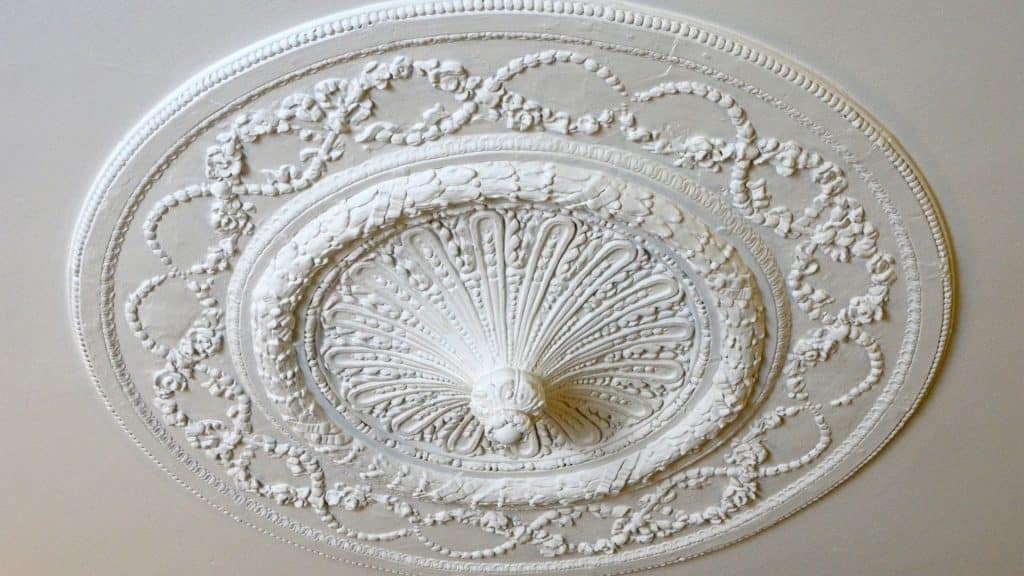
Ceiling medallions are a lovely, luxurious addition to any ceiling. They were used in the 19th Century to showcase a chandelier, but you can add them to almost any ceiling. Medallions come in many designs and sizes and work well in traditional homes. If you have short ceilings, a medallion can be an excellent way to add some ceiling details without adding too much weight or inches, making your ceiling either seem shooter or shorter. Sometimes, you can add a thin yet ornate trim border to coordinate with the medallion for extra elegance.
Tray
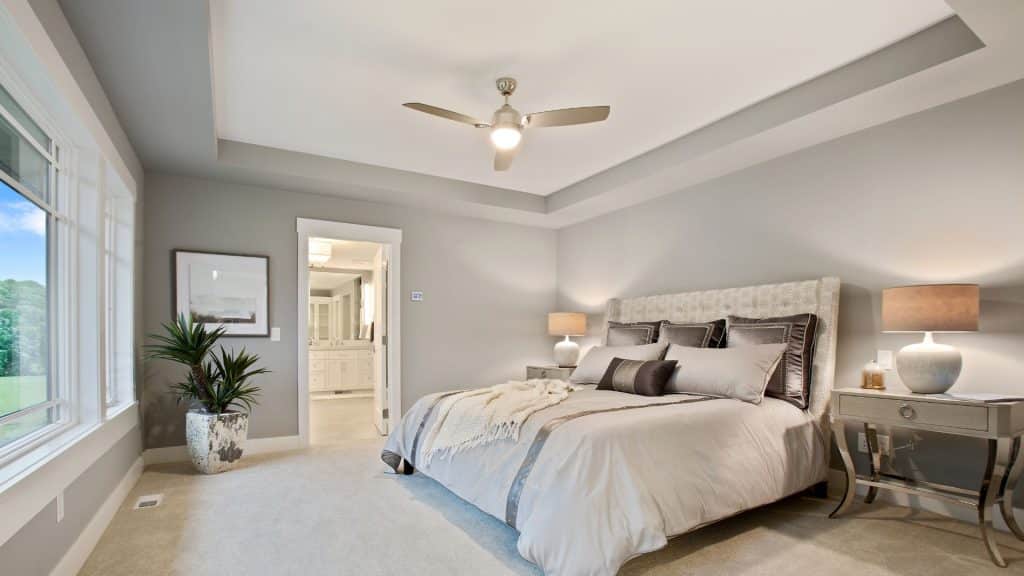
Tray ceilings became popular in the 1990s to add detail and luxury to suburban homes. These make great basement options when adding more detail and making it feel like the rooms upstairs. Sometimes, people add accent lighting to their tray ceilings or paint the center white while painting the edges the same colors as the wall. These don’t only work in a few scenarios; as I mentioned, they are better in basements, but if you have incredibly high ceilings and want them to feel more intimate, a tray ceiling is a good option.
Coffered

Coffered ceilings were popular in the Renaissance and continue to define luxury. They sometimes are called waffle ceilings. Adding a coffered ceiling to a study or dining room can feel cozy yet luxurious. You’ll see them painted white but go for a rich wood tone if the budget allows. Avoid adding recessed lighting because breaking up the ceiling with lights can detract from the overall look. Use a central or two large lights evenly spaced, or choose to have lots of lamps around the room; it already feels old and chic, so adding lamps around the room adds to the charm.
Wood

Wood ceilings are always a good option, especially for colonial homes, but any newer ones. It brings an old soul to the house. We saw wood ceilings in the 1400-1500 and even the 1600-1700 Colonials. Before we plastered the ceilings, the wood floor joists would be exposed, and it’s a popular look today, even if it’s just applied to an already finished ceiling. Today, these ceilings look great in modern and traditional homes. You could clad your ceiling with the same material as your floors, just in a different tone, or paint them white for a subtle texture.
Beams
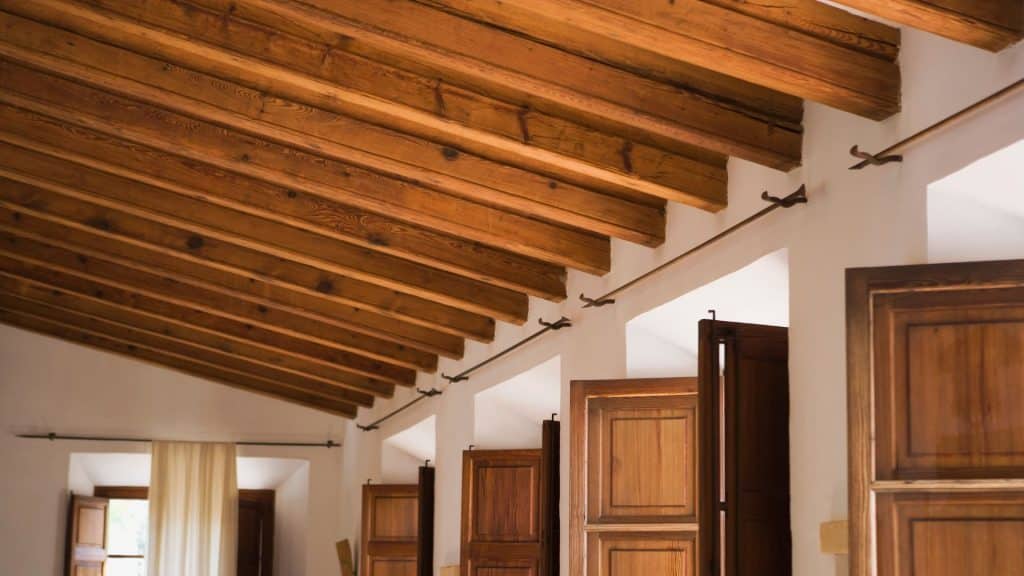
Beam-accented ceilings simply expose the necessary structure, and we have been exposed to it for many centuries. So it’s never a bad idea to expose the structure of the ceiling, whether real or faux. Use rustic beams for an antique look or sleek beams in a modern home. I’ve seen them in bathrooms lately, and I really like this look. It’s an extra element that looks interesting, and it really works in any room.
Paint

Paint is the most budget-friendly addition to any ceiling, and designers often recommend painting your ceiling 2 shades lighter than your walls. That’s a decent place to start, but I do not love that specific colors can look off when adding white; for example, if you want a dark, rich red room with dark accents, the lighter paint will be pink. If you have light walls and short ceilings you want to heighten, paint the whole ceiling the same color as the walls. You could also bring a dramatic and dark color onto the ceiling and molding to color drench the room. Now, you can paint a room dark if it gets good light.
Wallpaper
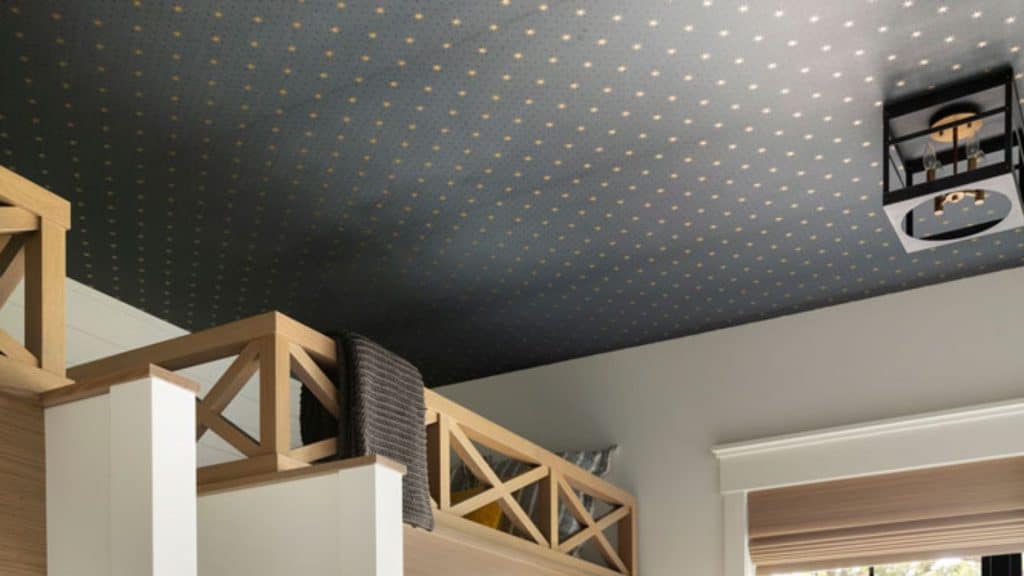
Wallpaper has existed for a long time and is still underutilized in our homes today. I love to see the wallpaper in a powder room, dining room, or hallway. It can also work great on the ceiling, but specific patterns work better than others. Go bold if you want to; it can look great, but for most of us, going with a more subtle pattern can look charming and effortless. Something like a monochrome pattern, grasscloth, or something that exudes classic clothing like blue wallpaper with subtle white polka dots.
We may receive compensation if you click on links we provide.





Leave a Reply