If you were lucky enough to have purchased a house in the last five years, you may have a cramped home. You might be thinking it’s time for an addition because it’s just not worth selling to then have to buy an expensive home with a high interest rate.
It’s easy to look at Instagram or Pinterest and see all these large and beautiful homes to get inspiration for your addition, but you won’t find how big that space is and how much it costs. I’m all about less and more, and we truly don’t need a huge space like we think we do.
Make a list of needs and wants
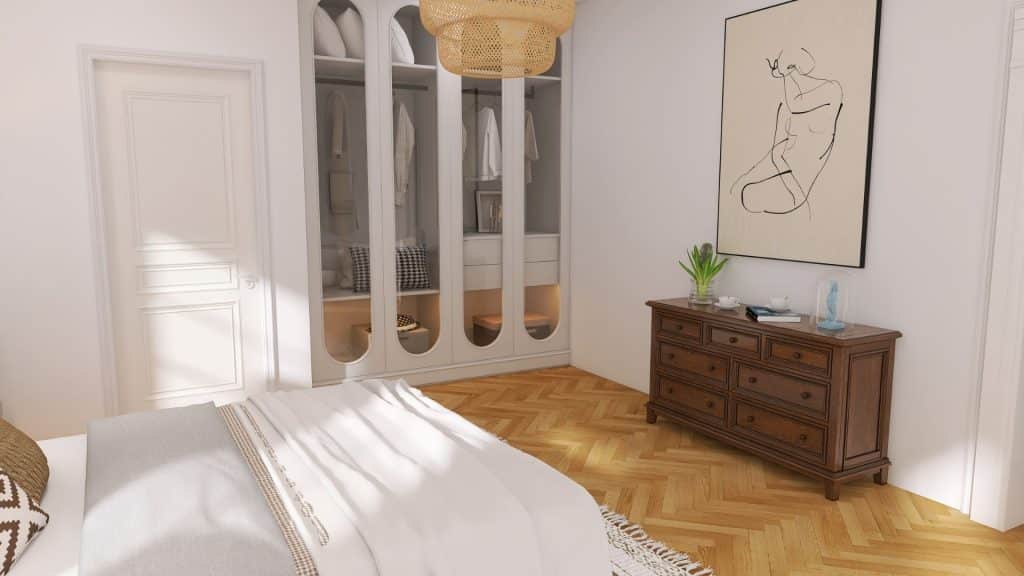
Start by making a list of needs and wants. We all have a budget to consider, especially for an addition. By understanding what we truly need and what we desire, we can prevent our budget from spiraling out of control. Remember, when our needs are met, we don’t feel deprived of our wants. This can be simple like a bedroom large enough for a king bed and a seating area or an ensuite with a linen closet or large window.
Choose the ideal entry location
Next, you’ll want to look at your home to find the ideal spot to build your new addition, especially for a primary suite. You don’t want the entrance to your bedroom to be off the kitchen or dining, so you’ll need a better spot in terms of entry from the existing home and the best location to build in your plot of land.
For example, my study is located on the west side of my home, away from the kitchen and the main living space. Also, it faces the backyard, front, and side yard. We have four windows and a large 6′ glass double door at the back of the house.
At the back of my home we have a deck and the yard slopes ending at an old rhododendron that I have no desire to cut down, so that won’t be a good spot for an addition. Two of the four windows face the front yard, about 8′ of grass, and then dense woods with lots of large oaks and white pines, and I don’t have the budget or stomach to cut down these trees that give us lots of privacy and fall color, so that doesn’t work either. The side of my house, however, has two windows and a large piece of land that is just grass so that is the most ideal location and budget friendly.
Get a rough idea of the size
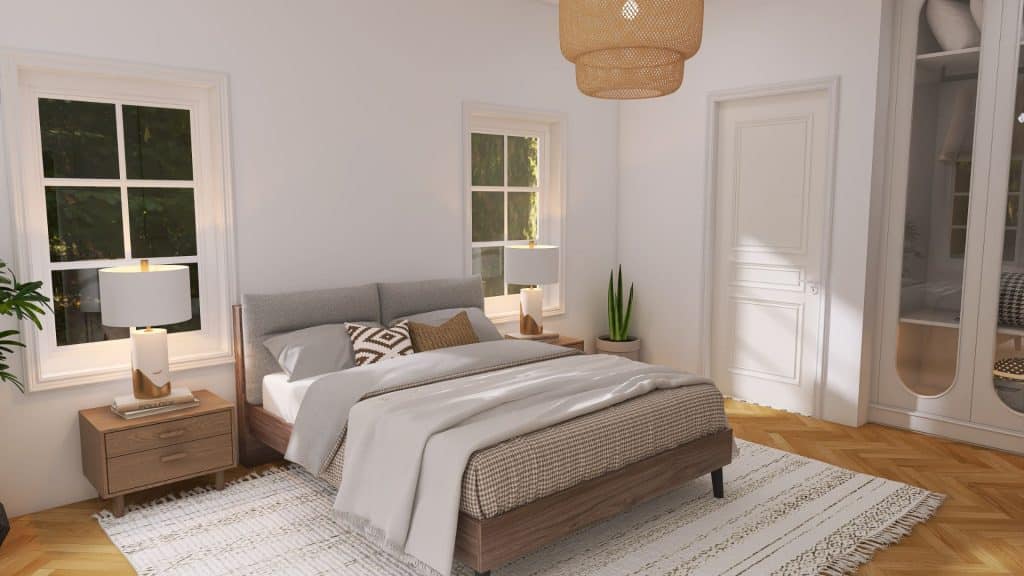
But my grass filled side yard has a leach field where my septic tank is buried, so I researched how far the house needs to be from it; it’s 5′, by the way. So, if I make the addition roughly the same size as the study, 25’ x 13′ 1″, it will be 5′ from the septic. If I decide I want a bigger space I’ll need to budget for a new septic tank and dig up a new location and cut down some large trees which will be north of $25,000 and I really don’t want to do that. Plus, I can make one window into a doorway since that is the most ideal and cost-effective location to enter the primary bedroom and I can fit a king size bed and a small seating area.
Play around with a floorplan
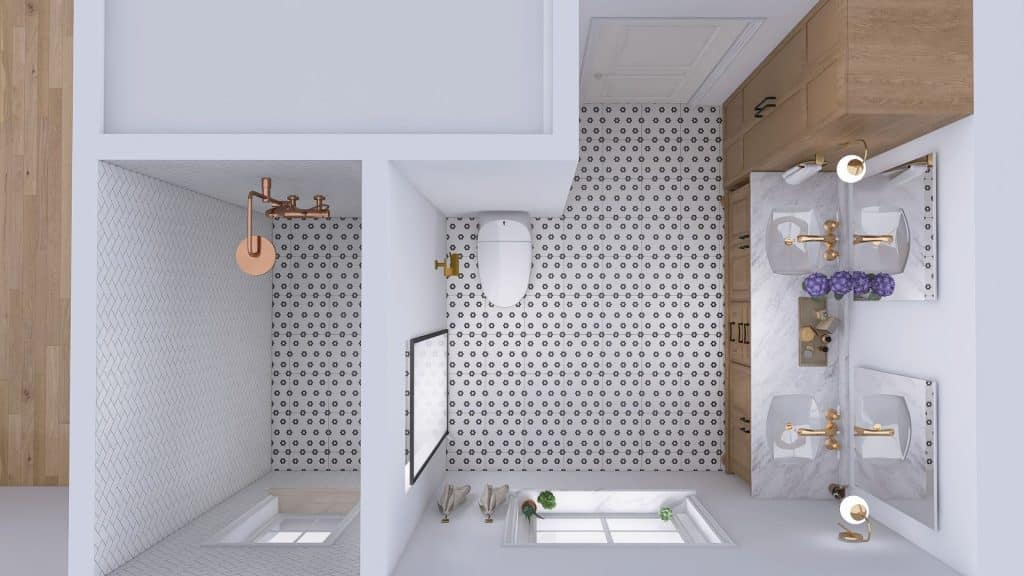
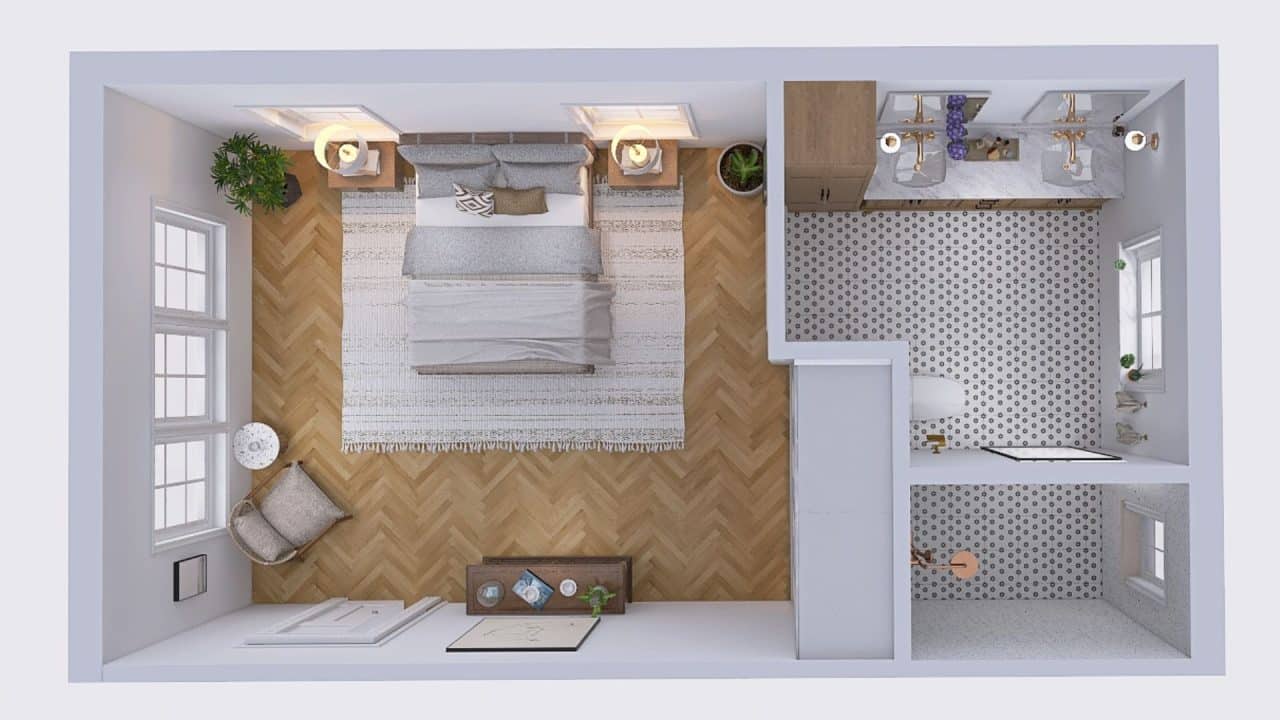
Now that I have my overall size, I can start to do some space planning to ensure I can actually fit everything on my needs list in this space. But, generally, a 224 sq ft bedroom and a 100 sq foot ensuite are the average sizes for both rooms. Now, just because it is average doesn’t mean it’s too small to function as those spaces, so ensure you do all your space planning or hire an interior designer before assuming it’s too small.
Of course, I would love a soaking tub and a walk-in closet, but I won’t be able to now, possibly in the future, when the budget allows. Either way, I want my home to have a symmetrical exterior, and I don’t need a soaking tub or a walk-in closet. You want to ensure your addition is the ideal size, not too big, not too small.
Look to the existing house to inform windows and doors
I see many additions where the exterior windows on the existing home are different from the addition, and that’s a mistake. It can look like a mistake and make the home look off. If you don’t like the style of your existing windows, consider changing them out during the addition process so they all match up. The same goes for the door styles; if you hate the 6-panel colonial doors, change them to a different door style, especially if you don’t have a colonial home. Look to the home’s architecture to make these decisions.
Let the architectural style determine material choices

Whether it is a Victorian or Mid-Century home, look at the details on your house that go unnoticed during your busy days in the garden or when your running late for work. Do you have exterior trim? Corbels, a gabel detail or finials? What do the handrails and siding look like?
I encourage everyone to work with the style of their home, whether it is a perfect example of a Victorian home or an 80s colonial with details that don’t make sense in a colonial and you’ll want to rectify that. Be true to your home’s architecture and use that to inform the addition details. It will make your addition look like it’s always been part of your home. You can also research interior details, flooring, and wallpaper to determine what is true to your home style. You can modernize it too, like current trends for window treatments or hardware.
We may receive compensation if you click on links we provide.




Leave a Reply