
Universal design provides more independence, safety, accessibility, and comfort and aging in the home are topics that have increasingly been asked about. About 10 years ago, at the start of my career, clients didn’t want to spend something other than money on ideas that could help them age into the home. Universal design was only required in commercial spaces.
Well, only some homes use universal design considerations. Builders construct modern homes to go up as quickly and cheaply as possible. These spaces often don’t work for people in wheelchairs, little kids, or anyone, honestly. Essentially, universal design is the design of buildings, products, or environments to make them accessible to people, regardless of age, disability, or other factors. So, what elements can you change to become more universal?
Doorways
The doors and doorways need to be wider for wheelchair accessibility, a walker, or someone to help others walk around. You’ll want at least 32″ doorways. Right now, they can help you with room to carry groceries in or laundry baskets down the hallway and feel a little luxurious.
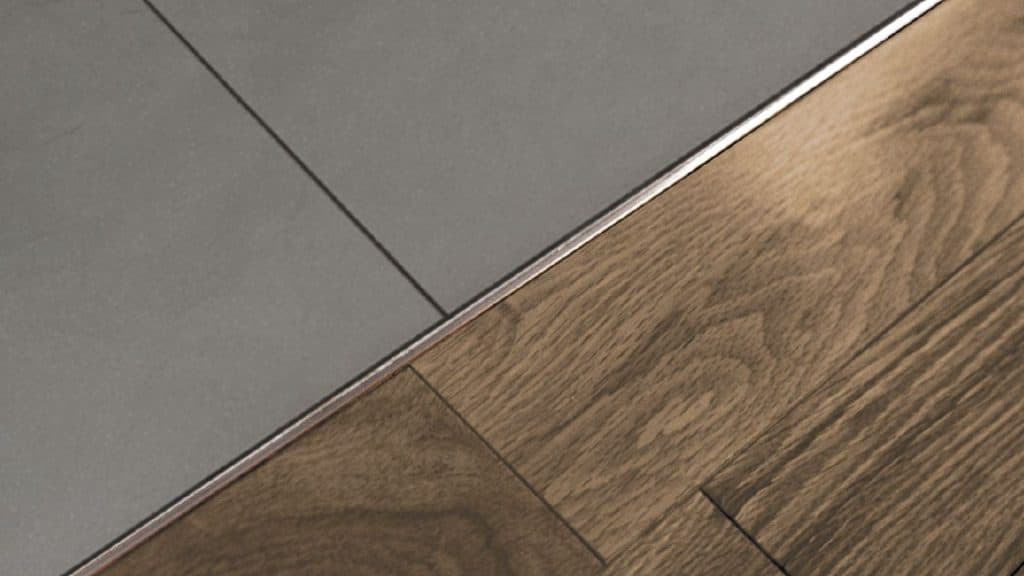
Also, we need to be mindful of thresholds. I’ve seen so many, with large, talking like 1 ⁄ 2″ thresholds that anyone would trip on. They cause toddlers and adults alike to trip, and as we age, we tend to shuffle our feet, so it’s best to have no thresholds.
Ensure there are no thresholds between different flooring types. If you have hardwood in most of the house, carpet in the bedrooms, and tile in the bathrooms, ensure each material is the same thickness so they line up perfectly.
Instead of large thresholds, use a Schluter transition between each flooring type to make the transition seamless. Or use caulk between tile and wood floors, not grout; caulk allows materials to expand and contract without causing cracking.
Stairways
Often, exterior steps are too steep, and interior stairs are in almost every home. It’s not great for everyone to climb stairs to get into the home. Ideally, you’ll want an elevator, but not everyone can retrofit their homes for one.
The best option besides an elevator or single-story home is to have a downstairs primary bedroom. That way, you can move from the living kitchen to the bedroom with less effort. If you do not like being downstairs, you could move to the first floor when needed.
Plumbing Fixtures

So, how do you incorporate universal design into your bathroom? The easiest and most cost-effective way is to select ADA-accessible products for people with disabilities. But these products are great for everyone! A comfort height toilet- that’s an ADA toilet. Perfect for anyone, old, young, or pregnant!

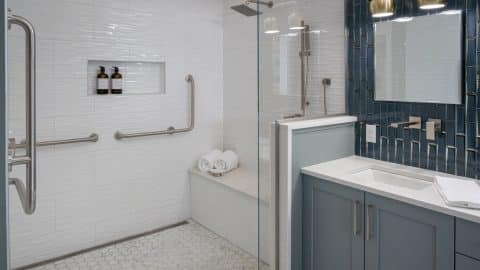
Select ADA-accessible faucets, shower valves, and sinks. Faucets are universal if they have a lever instead of a knob to turn, the same goes for showers, but sinks and tubs come in all types of universal designs up to working for a wheelchair. You’ll want to install grab bars around the shower, toilets, and a bench seat in the shower.
5′ radius
Make sure you have a 5′ radius in all bathrooms and approximately every other room or every room if the budget allows. That size radius is perfect for someone who has to turn around in a wheelchair or walker and works for anyone who wants a smarter-designed room that functions for any occasion.
Material options

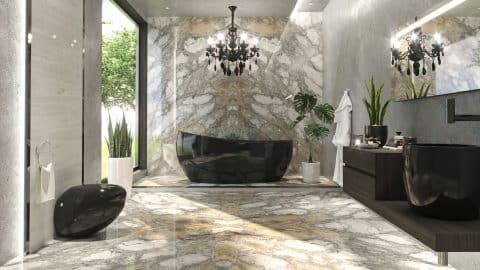
To dive deeper into an ideal design, plan a renovation to maximize your home. One of my favorite areas to change is the floors. First, select flooring that is not polished, like polished marble; it is just too slippery when wet. Plus, as you get older, there are better long-term solutions for flooring. Instead, use a porcelain tile in a honed finish.
You can find a universal design for almost everything in your home, like cabinets. Select a wall-mounted sink or a cabinet with doors but nothing underneath. You could do this in the most easily accessible bathroom so your other bathrooms, like for the kids, have storage for hair ties, bath stuff, and baby tubs.

Lever door knobs are more accessible for most people to use. Knobs require turning your wrist, which can be difficult for some people. If you worried about kids going where they shouldn’t, you could put a deadbolt further up the door until they’re older.
Kitchen considerations
Things like a base cabinet microwave or oven, a lowered sink cabinet with access to the underneath, and drawer fridges are good options. But, I can understand where people want their kitchen aesthetic to look a certain way.
It’s always good to have part of your kitchen that is lower than the rest, and make it a work station. If you do this for a 4’-5′ section of cabinets with a microwave and drawers, you could use this area for cooking and prepping. You could also add a hot plate for easy use. If you don’t need it for universal design purposes, it will still make a good working area, and the current trend is to have the microwave tucked away.
If you simply don’t want to do a universal work station, use mostly base cabinets with drawers, universal or not; these function better for storage, so do this anyway. Use closed-ended cabinet pulls and pegs in the drawers for easy organization.





Leave a Reply